The Bolzano Supervolcano

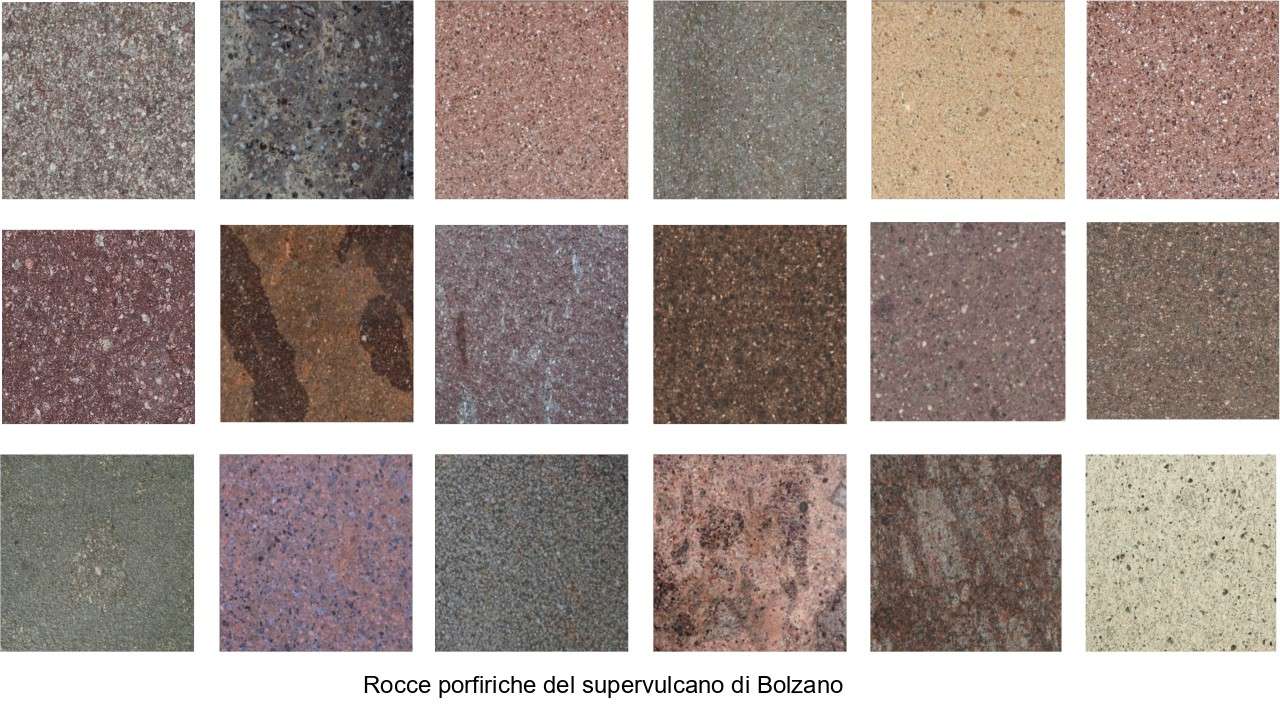
Leaving the city of Bozen and travelling through the Ega Valley, one can observe the impressive porphyry strata crossed by the road and the Ega River.
These layers, which in some places reach a thickness of over 2000 metres, were produced in the Permian era by the Bolzano Supervolcano.
280 million years ago, Trentino-Alto Adige was a gigantic volcanic zone and its Supervolcano, with a diameter of about 70 km, was one of the largest volcanic events in the history of the Earth. The Supervolcano’s activity lasted about 12 million years and twice produced an enormous caldera.
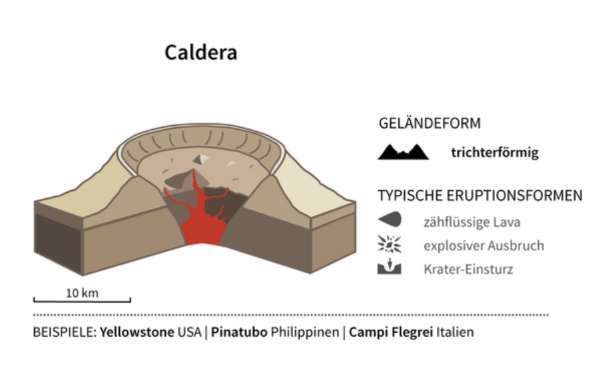
A caldera resembles a large crater many kilometres in diameter. It is formed by the collapse of the rock layer above an enormous magma chamber.
Current examples of caldera are the Campi flegrei near Naples and the Yellowstone caldera (USA), which is the largest active caldera.
The Bolzano Supervolcano, 280 million years ago, was located near the equator. It belonged to a large volcanic area that included northern Italy and southern France.